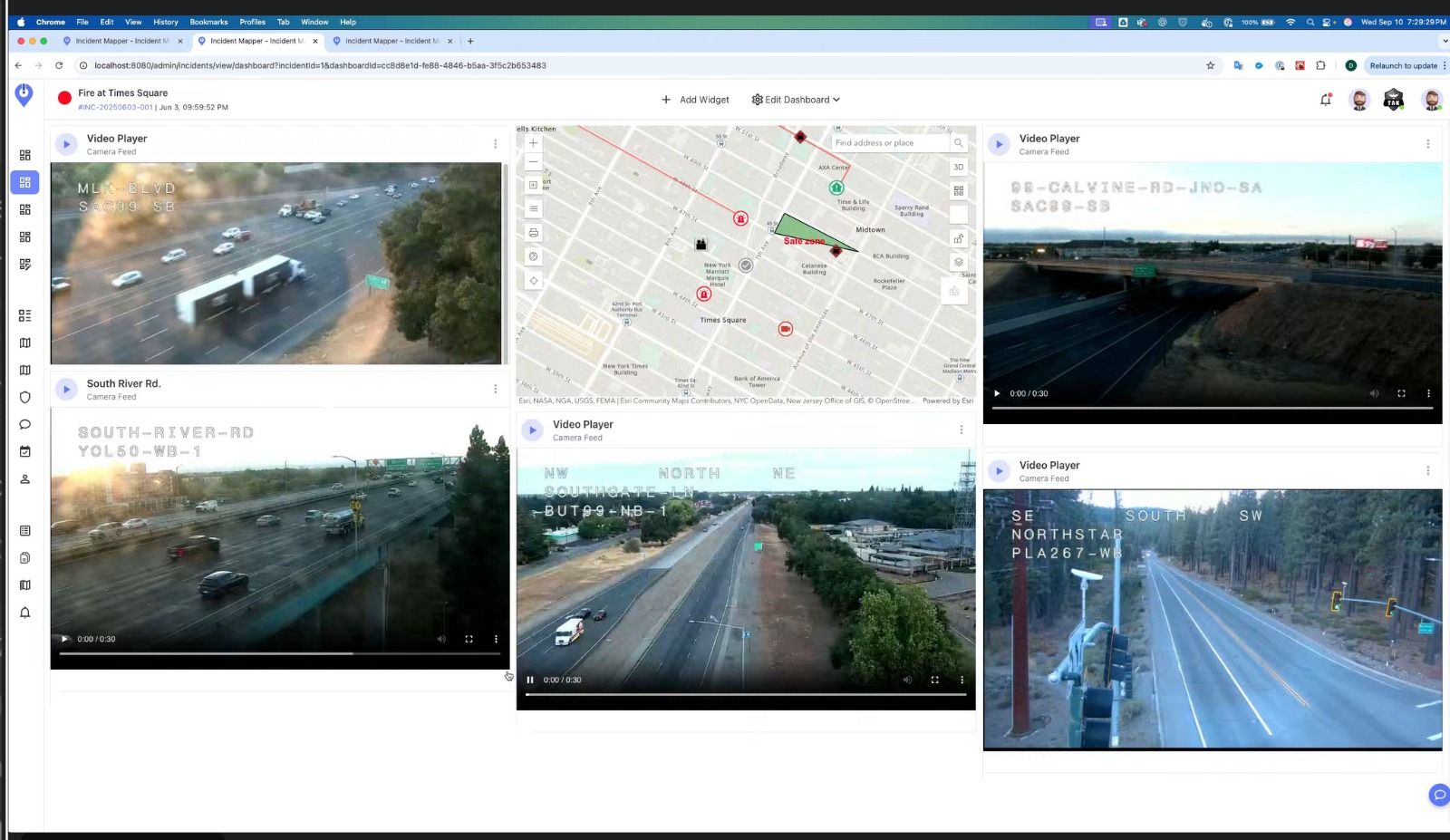
GeoSightOps integrates live video directly into the operational environment. Camera feeds appear on the map at their physical location and can be viewed in resizable dashboard widgets. Combined with AI-powered video analytics, operators can move from alert to visual confirmation without leaving the platform.
Camera Feed Management
- Add and manage live camera feeds from any networked source
- Display feeds on the map at the camera's geographic position
- View feeds in resizable, movable dashboard widgets
- Support for multiple simultaneous streams
Supported Protocols
- RTSP (Real-Time Streaming Protocol)
- RTMP (Real-Time Messaging Protocol)
- DASH (Dynamic Adaptive Streaming over HTTP)
- WebRTC (Web Real-Time Communication)
- HLS (HTTP Live Streaming)
- YouTube live streams
- Additional protocols supported through custom configuration
AI-Powered Video Analytics
- Object detection — people, vehicles, vessels, and equipment
- Perimeter breach detection
- Behavioral analytics and anomaly detection
- Network Video Recorder (NVR) and security camera integration
- Computer vision pipelines for automated monitoring
Mobile Video Streaming
- Stream live video from iOS and Android devices directly into GeoSightOps
- Field personnel can broadcast from their phone camera to the Common Operating Picture
- Streams are geo-tagged and appear at the broadcaster's location on the map
Custom Integrations via Webhooks
GeoSightOps supports custom integrations with any third-party system through webhook configuration and its API-first architecture. Connect your existing tools without replacing them.
Why It Matters
- Eliminates the need to switch between separate video management software and the operational map
- Allows operators to verify alerts visually within seconds
- AI analytics reduce manual monitoring burden for large camera networks
- Mobile streaming provides ground-truth video from field responders in real time
Ready to see GeoSightOps in action?
Schedule a live demo and we’ll show you exactly how GeoSightOps integrates with your existing systems.